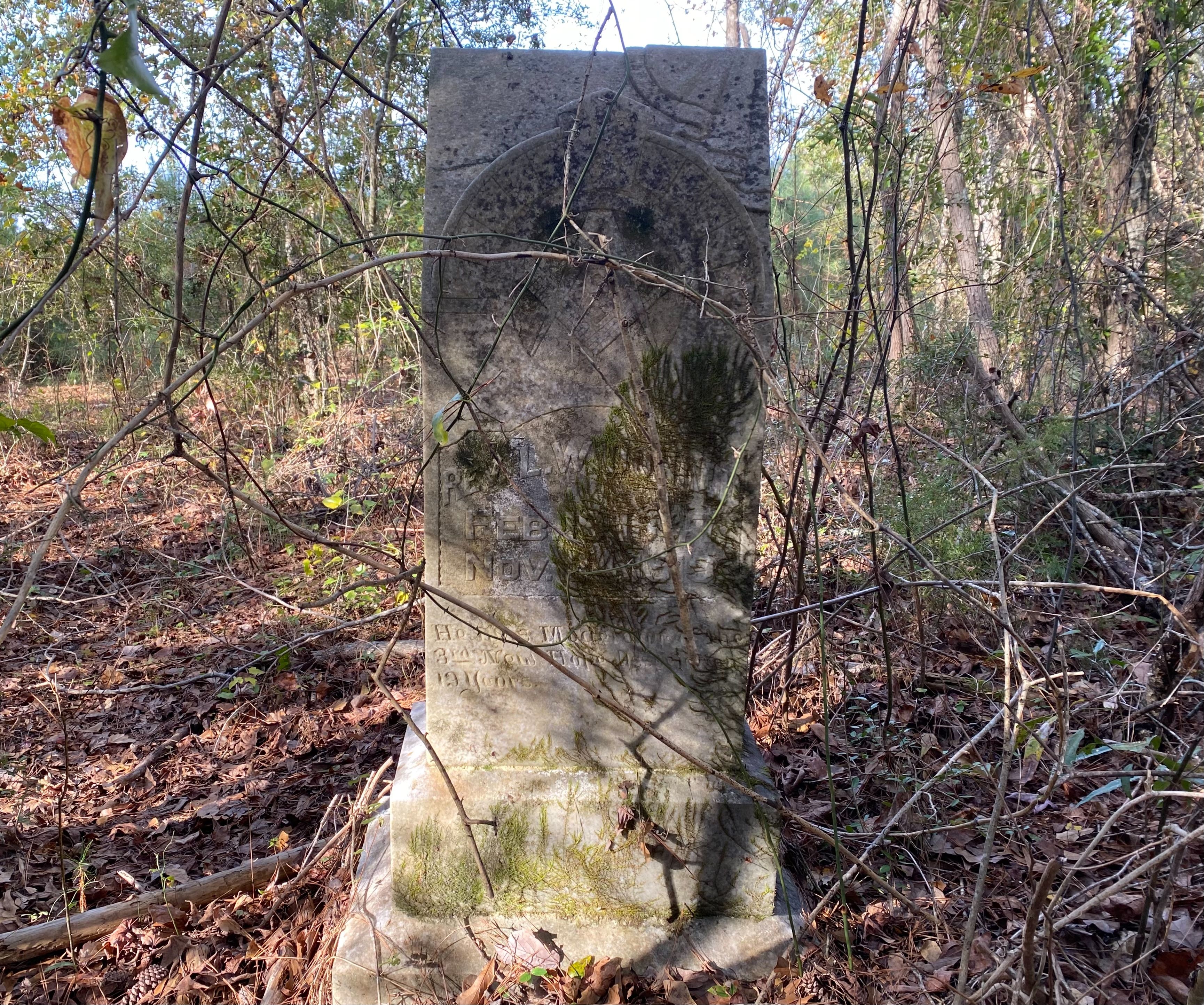
Cemeteries are more than just resting places—they are historical records etched in stone. In Newton County, many burial grounds tied to Black families, churches, and rural communities have fallen into silence. Some are hidden beneath a century of forest growth; others have been obscured by development or forgotten on private land. Yet, these sites hold the vital keys to our history that no census record can provide. In communities like Bethel, Lawrence, and the rural church grounds scattered across the county, these burial sites are often the only surviving record of entire family lines.
The Headstone as a Primary Source
In an era where written records for African Americans were often sparse or deliberately excluded, a single headstone can be a breakthrough. A weathered marker might confirm a birth year, a maiden name, or a kinship link that helps us bridge the gap between slavery and freedom.
Even when a grave is unmarked, the layout of the land tells a story:
- Family Clusters: The proximity of graves often reveals relationships that were never recorded in a marriage ledger.
- The “Mourner’s Row”: A row of small, unmarked plots can reflect epidemics, infant mortality, or seasons of hardship that left scars no newspaper recorded.
- Veteran Honors: Flags or specific stone types can identify men like James English/Hicks, ensuring their service to the nation is never forgotten.
The Challenge of the “Hidden” Cemetery
Tragically, many of our ancestors—particularly those born in bondage—were not given permanent headstones. They were often laid to rest with wooden markers that have since rotted away, or simple fieldstones that have sunk into the Mississippi soil.
Mapping these “hidden” cemeteries is an act of restoration. When we document a site, we aren’t just clearing brush; we are:
- Validating a Life: Proving that an individual existed, worked, and was loved.
- Connecting Descendants: Providing a physical space for families to return to and honor their heritage.
- Preserving Legal Rights: Ensuring that these sacred spaces are recognized and protected from future land disturbance.
How You Can Help
This website serves as a digital repository for the maps, stories, and names found in Newton County’s sacred spaces. We are working to restore the names to the land, but we cannot do it alone.
We invite you to contribute:
- Share Your Photos: Do you have a picture of a headstone that is now unreadable?
- Share Your Directions: Do you know of a “family plot” deep in the woods that isn’t on a map?
- Share Your Oral History: Did your grandparents tell you about a church cemetery that no longer stands?
By reclaiming these sacred grounds, we honor those who came before us. Restoration is more than maintenance — it is an act of respect and a declaration that these lives will not be erased.
Leave a Reply