Pip: Three presidential names, one Black Mississippi family, and census records that quietly refuse to stay quiet — this is the kind of history that hides in plain sight until someone decides to actually look.
Mara: Samp has been looking, and today's episode follows one thread from that research: how a family's naming choices across three decades map onto the arc of Reconstruction, Redemption, and what hope looked like when the ballot was being taken away.
Pip: Let's start with the names themselves — and the patriarch who gave them.
Grant, Johnson, Garfield: A Black Mississippi Family and the Politics of Hope
Mara: The question at the center of this post is deceptively simple: why would a Black family in rural Mississippi name their children after presidents? The answer, it turns out, runs straight through the political timeline of Reconstruction.
Pip: The anchor here is Thomas Atkins — born into slavery in 1812 in South Carolina, recorded by 1870 as a farmer in Neshoba County. And the post makes a point about what the census line actually signals.
Mara: Right — and the post puts it directly: "a man once legally classified as property was now recognized, at least on paper, as part of the American civic body."
Pip: On paper is doing a lot of work in that sentence. But so is the naming. Thomas couldn't read or write, yet the post argues that naming was its own form of agency — one of the few available.
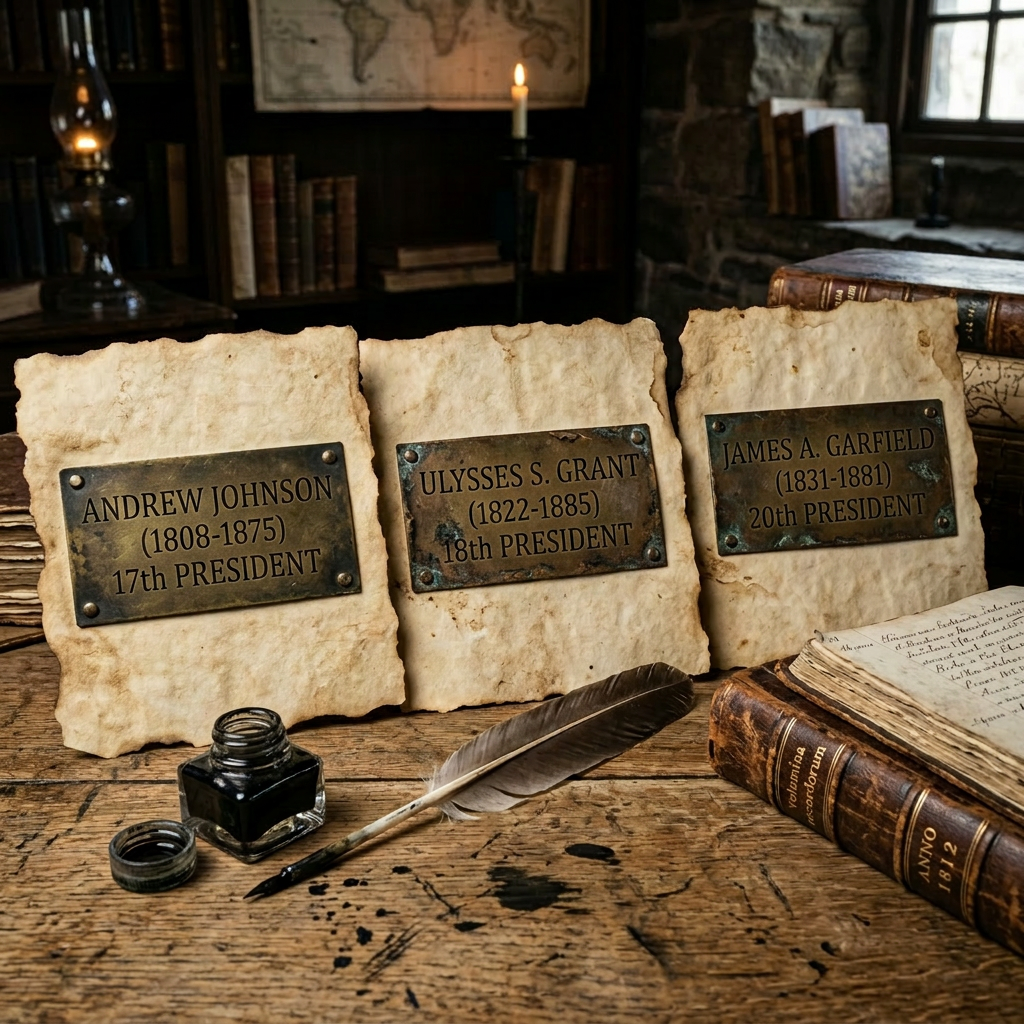
Mara: The post maps each presidential name onto a specific political moment. Andrew Johnson Adkins, born around 1864 to 1866, arrives at the transitional close of the Civil War, before Johnson's resistance to Reconstruction had fully registered in rural Mississippi. Grant Adkins follows around 1872, during peak federal enforcement — the Fifteenth Amendment upheld, the Enforcement Acts active, Black men voting and holding office.
Pip: And then the arc bends. Garfield Adkins is born in 1885, after the Mississippi Plan of 1875 had already dismantled Black political power and federal troops had withdrawn.
Mara: The post reads Garfield's name as remembrance rather than expectation — James Garfield, assassinated in 1881, had become, like Lincoln before him, a symbol of interrupted promise. Naming a child Garfield in 1885 may have been a way of holding onto a federal commitment that had once seemed real.
Pip: There's also a quieter thread running alongside the names — the family surname shifts from Atkins to Adkins across the same decades, and the post frames that as growing literacy producing growing agency over one's own written identity.
Mara: Geography matters here too. The family lived near the Vicksburg and Meridian Railroad, which meant presidential deaths and federal legislation traveled to them by telegraph and train. The politics of hope in this household were not abstract.
Pip: The post closes on that note — no diaries survive, no letters explaining the choices. But the pattern across three pivotal decades is, as it puts it, difficult to dismiss.
Mara: What the names trace, taken together, is the full arc: slavery, emancipation, Reconstruction, Redemption, land ownership, literacy — carried forward not in a speech or a recorded vote, but in what the next generation was called.
Mara: What stays with me is the idea that naming was one of the few durable declarations available when other forms of political voice were being closed off.
Pip: History compressed into a birth record. More of that kind of looking next time.
Leave a Reply