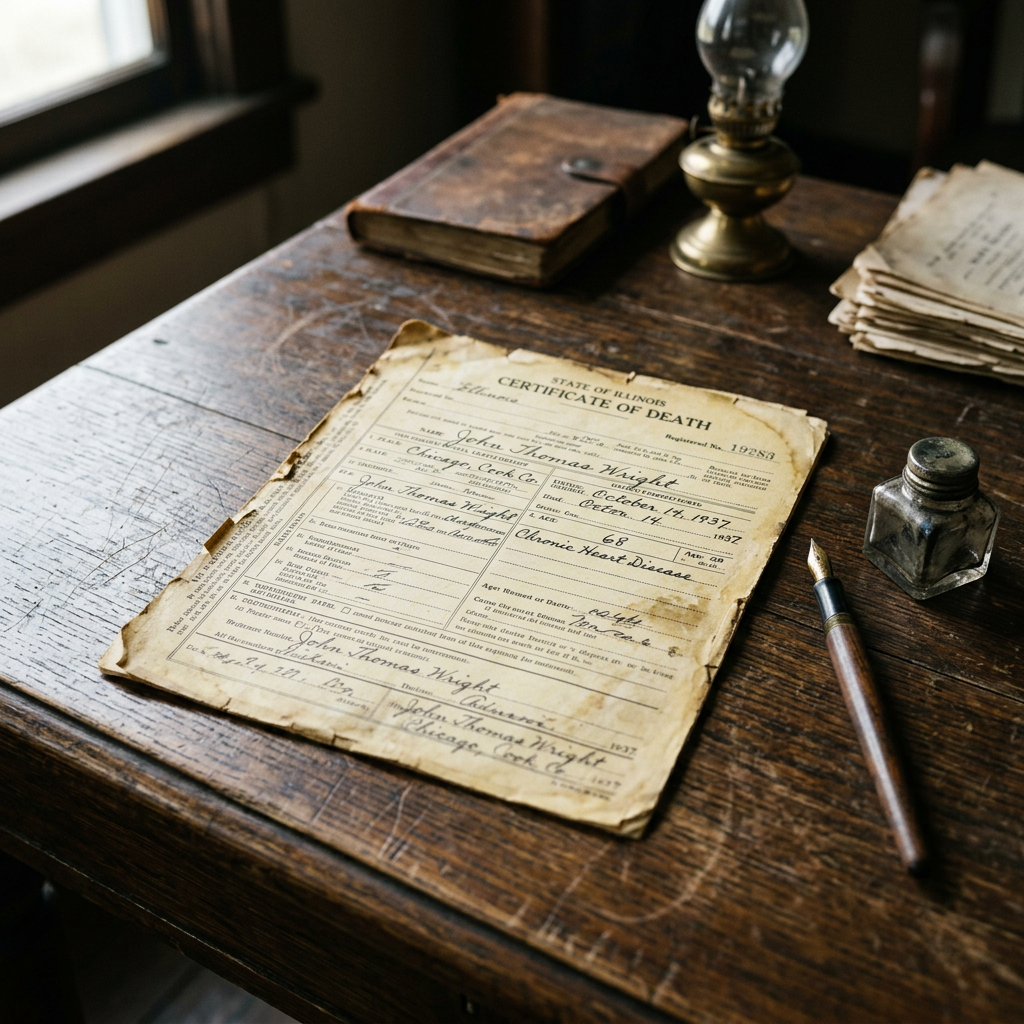
Pip: A death certificate is supposed to close the file. For Richard Ware of Newton County, Mississippi, it reopened everything — and that's the kind of discovery Samp specializes in finding.
Mara: This episode follows one family's story through Reconstruction, Jim Crow, a criminal case, a governor's pardon, and a death that left more questions than answers. Let's start with the unwritten laws that shaped all of it.
The unwritten laws of Newton County
Pip: The question at the center of this story is deceptively simple: what does a death certificate actually tell you — and what does the silence around it mean?
Mara: The post opens with a line that frames the whole inquiry: "History is not only the search for answers; it is also the discipline of knowing where the evidence ends."
Pip: That's the methodological warning label on everything that follows. Richard Ware built a farming operation in the Lawrence community, earned his neighbors' respect, owned his land debt-free by 1920 — and then his death certificate listed the cause as poison.
Mara: Strychnine, specifically. An autopsy was performed, his stomach forwarded to the Mississippi State Chemist. When officials requested clarification, the attending physician responded with seven words: "Strychnine given by unknown person with homicidal intent."
Pip: Seven words that rewrite a life story.
Mara: What makes the earlier part of the story equally striking is the 1917 petition to Governor Theodore Bilbo. After Richard shot a man who had allegedly assaulted his daughter and surrendered voluntarily, neighbors petitioned for his release — and the petition openly acknowledged that had Richard been white, he likely would never have been indicted or convicted.
Pip: A community putting the double standard in writing, addressed to the governor. The pardon came through, but as the post frames it, justice wasn't guaranteed — it was negotiated, dependent on reputation and the willingness of neighbors to advocate.
Mara: Success didn't erase vulnerability. Richard owned his farm outright, was literate, respected. By 1929, he was also a widower — his wife Laura had died in 1927 — and then came the poisoning, with no surviving record of an arrest, indictment, or prosecution.
Pip: The archive goes quiet exactly where you want it to speak.
Mara: The post is careful about that silence. When a grandson named William Marshall appears in the 1920 census — same surname as the man Richard killed — the instinct is to connect the dots. But as the post puts it directly: questions are not evidence.
Pip: Which is the discipline the opening quote was pointing toward all along.
Mara: Richard Ware's story reaches past one family. It's a case study in what the Jim Crow era's records can and cannot confirm — and in what it means to stop at the edge of the evidence rather than fill it in.
Pip: One death certificate, one physician's seven words, and a case that was never resolved on the record.
Mara: The silence in the archive is the story. That's worth sitting with until next time.
Leave a Reply