Pip: Newton County, Mississippi — rural, red-clay, and quietly carrying more history than most places twice its size. Today we're sitting with work that Samp has been building at Our Unique Stories, and it reaches across generations.
Mara: This episode covers one sweeping theme: the African American veterans of Newton County — who they were, what they served through, and what they built when they came home.
Pip: Let's start with the veterans themselves.
Their Service, Our History: Honoring Newton County's African American Veterans
Mara: The post opens by naming the full arc — from the Civil War through Vietnam and beyond — and the central tension it holds is this: these men and women defended democracy abroad while confronting racial discrimination at home.
Pip: The post puts it plainly, and it's worth reading directly: "Their military service stretched across generations, from formerly enslaved men who joined the Union Army during the Civil War to soldiers serving in World War I, World War II, Korea, Vietnam, and later conflicts."
Mara: What that sentence does is collapse about a century of American military history into one community. Newton County isn't a footnote here — it's a throughline.
Pip: And the earliest names anchor that immediately. Lewis Willis Donald of the 48th United States Colored Infantry, Alfred Young of the 3rd United States Colored Cavalry — men for whom enlisting was, as the post frames it, an assertion of humanity in a country that had denied enslaved people their fundamental rights.
Mara: World War I brought a different kind of service. Soldiers like Genie Chapman, Dump Chapman, and Charley Evans served in Pioneer Infantry and labor units — construction, transportation, supply handling. Essential work, rarely decorated. And Private Richard David Ware Jr. died of pneumonia at twenty-three, never reaching a battlefield, which the post calls a reminder that military service carried grave dangers far beyond enemy fire.
Pip: World War II deepens the record considerably. Wess Evans returned from Germany as a disabled combat veteran after artillery fire in late 1944. Corporal Albert Billingsley survived capture near the Chosin Reservoir in Korea — one of the most brutal engagements of that war.
Mara: But the post is deliberate about where courage shows up off the battlefield too. Malachi Evans integrated Newton Elementary School at age ten in 1966 — alone, before he ever wore a uniform. Judith Billingsley Freeman enlisted in the Women's Army Corps in 1951, among the African American women challenging both racial and gender barriers simultaneously.
Pip: Donza Jerry Walker came home from the Navy and put his name on public voter registration rolls during Jim Crow. That took a specific kind of nerve — the democratic rights he'd defended abroad, he had to fight for at home. That's not a footnote. That's the whole argument.
Mara: And figures like E.J. Whitehead and Vaulght Jackson — a funeral director and community organizer, a deputy and twenty-two-year Army veteran — show how that service translated into decades of local institution-building.
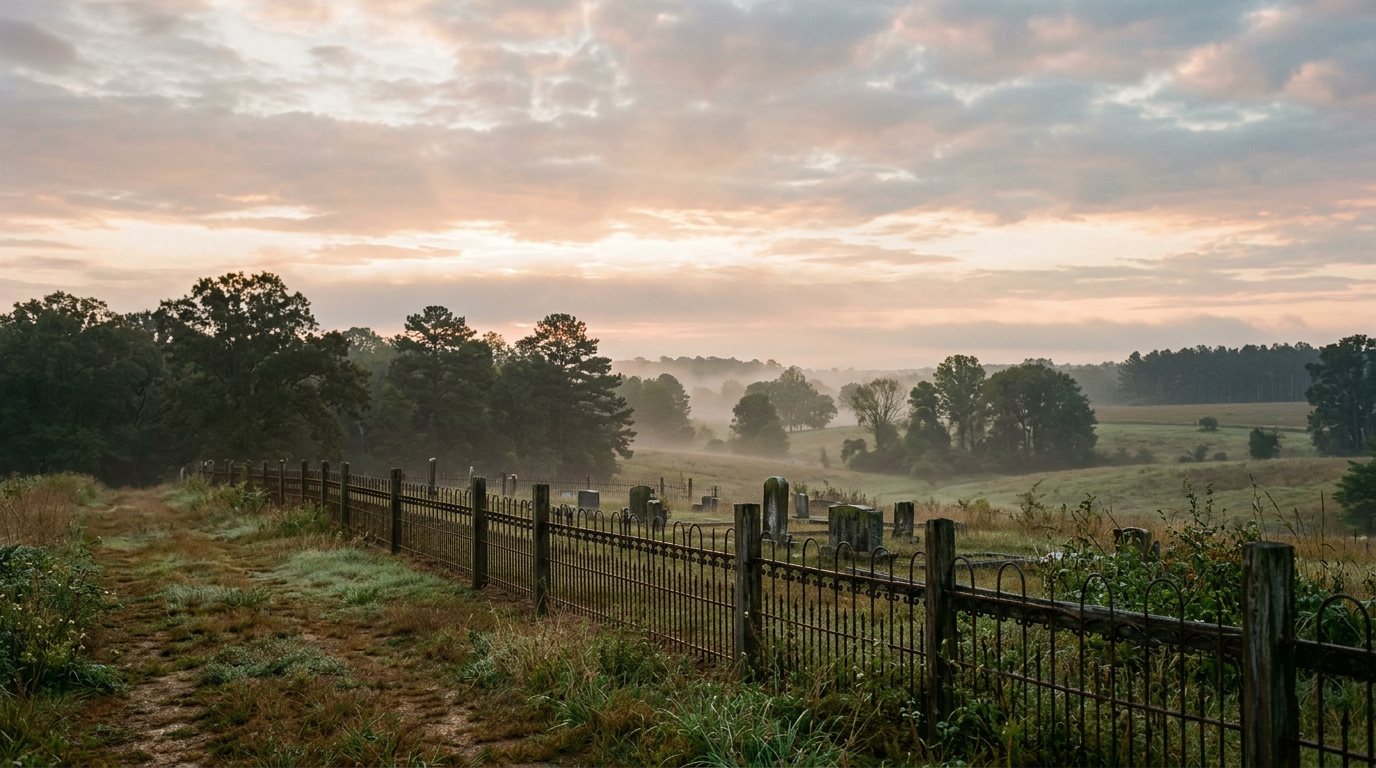
Pip: The post closes on the headstones scattered across Altare, St. John, Union Chapel, Bethel, and veterans cemeteries — and on the ones in unmarked graves, stories preserved only in military records and fading photographs.
Mara: Which is exactly why the documentation work at Our Unique Stories exists: to make sure those names don't stay nearly forgotten.
Pip: What stays with me is that the service didn't stop at discharge. It just changed form — classrooms, churches, voter rolls, community ledgers.
Mara: Newton County's history is still being written. More of it next time.
Leave a Reply